Robot anatomy
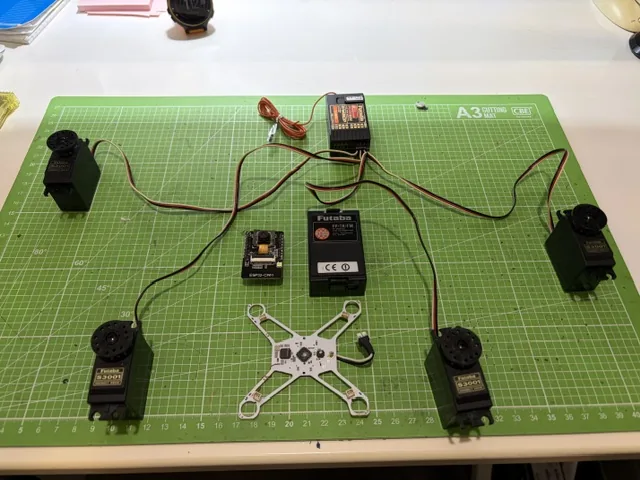
Robots combine structure, power, sensors, a controller and actuators. Let's investigate a real collection of radio-control and robotics components.
Explore the hardware
Tap a numbered marker in the photograph to identify a component and learn what it does.
Choose a numbered component
Start with number 6 — the X-shaped quadcopter frame near the bottom of the photo.
The enlarged photos are reference images. Component 8 in the overview cannot be positively matched to the microwave sensor close-up.
How the parts fit into a robot
Structure: The X-shaped quadcopter frame supports its electronics and, when assembled, propulsion hardware. Controller: Its integrated flight-control electronics process inputs and help stabilize flight. Sensors: Flight-control systems commonly use inertial sensors to measure motion. Actuators: The four separate servos demonstrate controlled mechanical movement. Power: A battery and suitable power distribution are needed for a working robot, but a complete propulsion/power system is not shown here.
Can you identify the structure, controller and actuators in the photograph? Which important components would you still need to build a flying quadcopter?
Hint: Most conventional quadcopters use four propellers driven by brushless motors, rather than these hobby servos, to generate lift.
Quick knowledge check
Which component directly produces the lifting thrust in a conventional quadcopter?